5G is one of the biggest buzzwords in internet technology, and for good reason. It promises faster speeds and easier setup than earlier wireless network options. But many people are still asking the same questions: Is 5G home internet good enough to replace wired connections? And more importantly, how fast is 5G home internet in real-world conditions?
This guide breaks it all down in plain language. You’ll learn what makes 5G different, how it works, how fast it really gets, and when it makes sense to choose it over a wired connection like fiber.
What Is 5G Home Internet?
5G home internet is a type of fixed wireless access (FWA) that uses fifth-generation mobile network technology to deliver broadband to your home. Instead of running fiber or coaxial cable directly to your house, your service provider beams internet wirelessly from a nearby 5G tower to a 5G receiver or gateway in your home.
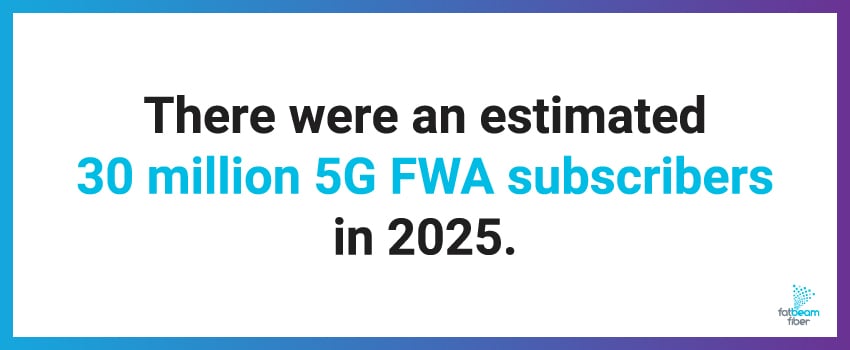
Interest in this type of service has grown quickly. There were an estimated 30 million 5G FWA subscribers in 2025, and that number is expected to nearly double by 2027 as carriers continue expanding their wireless networks.1 This makes 5G an attractive option for households that want fast setup, flexible installation, and access to modern broadband without waiting for new wiring in the neighborhood.
How Does 5G Home Internet Work?
Here's a quick breakdown of how 5G home internet works:
- A nearby 5G cell tower broadcasts wireless signals.
- Your home gateway captures the signal and converts it into internet access.
- Your devices connect through Wi-Fi or Ethernet to go online.
Because it doesn’t require underground wiring, 5G home internet is much easier to deploy than many other internet types. For many households, it’s as easy as plugging in the equipment and activating the service.
How Fast Is 5G Home Internet?
We often hear people ask, “How fast is 5G internet compared to fiber or cable?” Speed is where 5G really gets people’s attention, but it’s also where expectations need a little clarification.
Theoretical 5G Speeds
In lab conditions, 5G internet speed can reach up to 10 Gbps, but those speeds aren’t common for residential users. Most 5G home internet plans today offer download speeds between 100 Mbps and 1 Gbps and upload speeds between 10 Mbps and 100 Mbps.
Latency – the delay between when you send and receive data – on a 5G connection averages around 30 to 50 milliseconds. While this is better than older wireless options, it’s still higher than wired connections, such as fiber from a trusted provider like Fatbeam.
Real-World Performance
So, how good is 5G home internet in the real world?
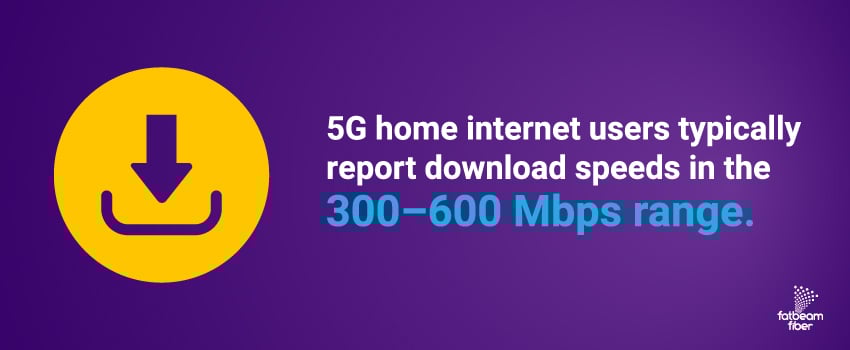
Most users report download speeds in the 300–600 Mbps range, which is more than enough for everyday use like streaming, online gaming, video conferencing, and supporting smart home devices. But because it’s a wireless signal, performance can fluctuate depending on how close you are to a 5G tower and how many users are online during peak hours. Weather, tall buildings, or trees can also interfere with the signal.
How Fast Is 5G Internet Expected to Get?
5G technology is still evolving, and speeds are expected to increase over the next few years as:
- Providers build more mid-band and high-band towers
- New capacity upgrades reduce network congestion
- Edge computing brings data processing closer to users
- Network slicing creates more customized performance levels
For now, expect 5G home internet to deliver steady performance in the 300–600 Mbps range, with future improvements pushing speeds toward gigabit levels.
Is 5G Home Internet Good for Your Household?
Whether 5G home internet is a good fit depends on your location and what you use the internet for. If you live in an area without fiber or cable and want an option that’s easy to set up, 5G can be an excellent solution. It’s also great for renters or anyone who moves frequently, since you don’t have to worry about physical installations or long-term contracts.
However, 5G does have limitations. Signal strength varies from one neighborhood to the next, and the service doesn’t provide symmetrical upload and download speeds. That means upload-heavy tasks like cloud backups or large file transfers may take longer. Homes surrounded by thick walls or tall trees may also need to position their gateway carefully to get the best performance.
Pros and Cons of 5G Home Internet
Still on the fence? Here’s a look at the pros and cons of 5G home internet:
Pros
- Quick deployment and setup
- No digging or installation hassle
- Potential for high speeds in ideal conditions
- Affordable plans with no hidden fees
- Great option for rural or underserved areas
Cons
- Performance varies based on location
- Limited upload speeds compared to fiber
- The signal may degrade due to interference
- Not ideal for heavy upload workloads
5G vs Fiber Internet: Compared
While 5G offers impressive performance, many still wonder how it stacks up against fiber. Let’s compare based on a few important features:
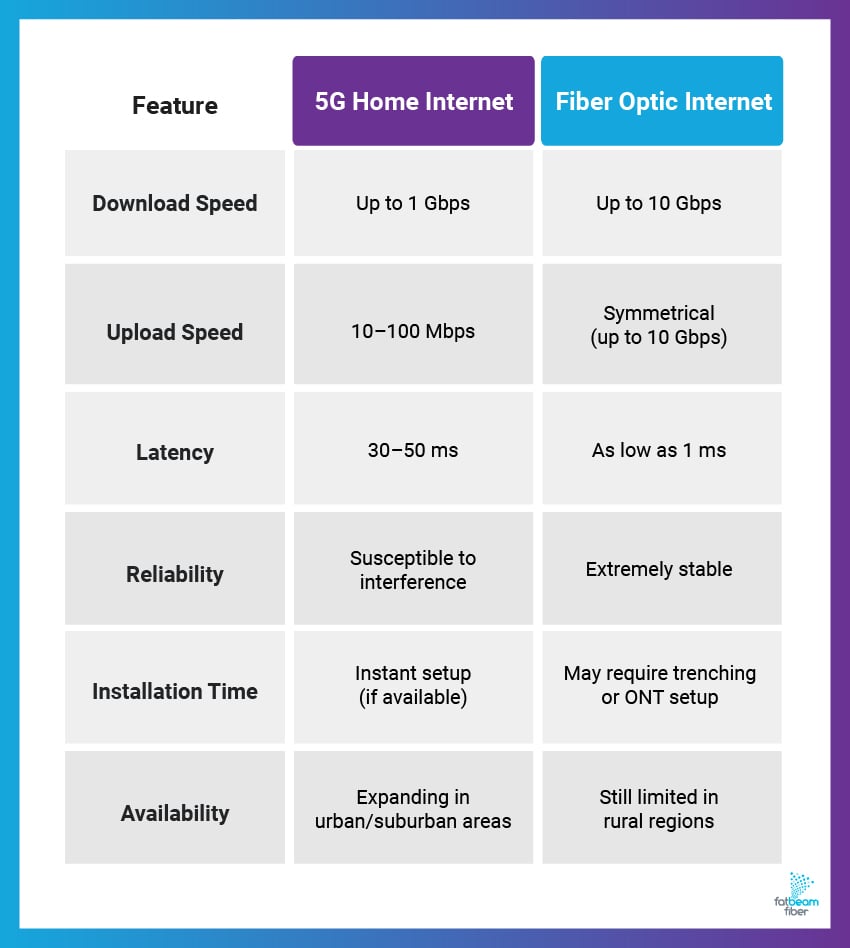
Fiber still wins when it comes to speed, reliability, and consistency. However, 5G’s accessibility and fast setup make it a strong alternative for areas where fiber isn’t available. Not sure if you can access fiber in your area yet? We made it easy to check if Fatbeam reaches your address.
Is 5G Worth It for Home Internet?
Here’s a quick guide to help you decide when it’s worth buying 5G home internet:
It’s Worth It If:
- You live in an area with poor broadband options
- You need faster speeds than DSL or satellite can provide
- You want a quick and easy setup
- You’re looking for flexible pricing with no contracts
It Might Not Be Worth It If:
- You can access better-performing fiber or cable options
- You need ultra-low latency for gaming or VoIP calls
- Your building is located in an area with weak signal reception
So, is 5G home internet a good choice? For many households, yes. It delivers faster speeds than older broadband options and offers a simple, flexible way to get online without waiting for construction or long installation windows. It can also be a strong option in neighborhoods where wired infrastructure is limited or still being built.
But how fast is 5G home internet in your location? That’s the real question – and the answer depends on your distance from the nearest tower, the strength of your local signal, and how busy the network is throughout the day.
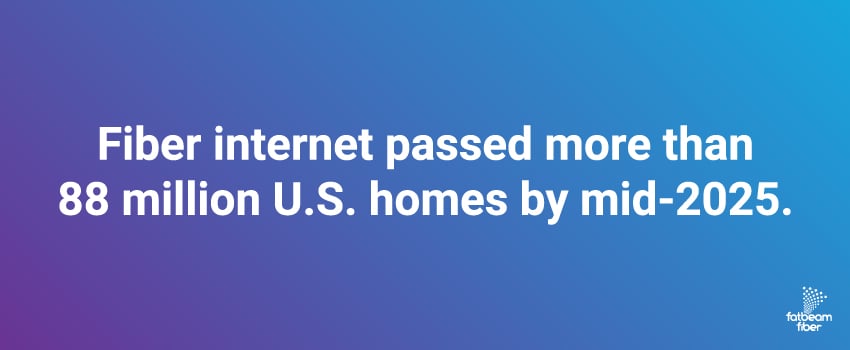
Fiber is still the most reliable option for long-term speed and stability. Availability continues to grow, with fiber internet passing more than 88 million U.S. homes by mid-2025.2 That growth makes fiber a top choice for households that rely on consistent performance for work, streaming, or gaming.
Need Help Choosing the Right Internet?
Whether you’re streaming, working, learning, or connecting with family, a dependable connection helps everything run smoothly. But finding the best internet service for your home comes down to what you value most: convenience or reliability.
At Fatbeam, we’re committed to helping you stay connected – whether through high-performance residential fiber or flexible wireless solutions. We serve communities of all sizes with reliable, future-ready internet that works for your lifestyle.
Ready to explore your internet options? Contact us today to find the right fit for your home or business needs.
Sources: