If you've spent any time setting up internet connections or troubleshooting network issues, you've probably encountered the terms LAN and WAN. These are two fundamental networking concepts that shape how data moves across the entire internet, which is why understanding the distinction between them can help you build a network that actually works for your business.
In this guide, we'll break down LAN and WAN, explore their key differences, and explain how they work together to deliver the connectivity that powers modern business.
What Is a LAN?
A LAN connects devices and computers within a limited geographic area – a single building, office, or home. LANs allow connected devices to share resources like files, printers, internet connections, and applications quickly and securely.
What Does LAN Stand For?
LAN is an acronym for "Local Area Network." The "local" part refers to how LANs operate within a confined physical space, typically owned and managed by a single organization.
Most LANs use Ethernet cables or Wi-Fi to connect devices. When you plug a computer into your office network via an Ethernet LAN cable or connect your laptop to home Wi-Fi, you're joining a local area network.
How LANs Work
LANs use switches and routers to direct traffic between connected devices. The LAN line, which is the physical Ethernet cable connection that joins a device to the network, sends data at high speeds with minimal delay because devices are physically close.
Modern LANs commonly support 1 Gbps speeds, with enterprise networks reaching 10 Gbps or more.
What Does WAN Mean?
A WAN, or Wide Area Network, connects multiple LANs across a larger geographic area. While a LAN connects devices in one location, a WAN connects networks across cities, states, countries, and even continents.
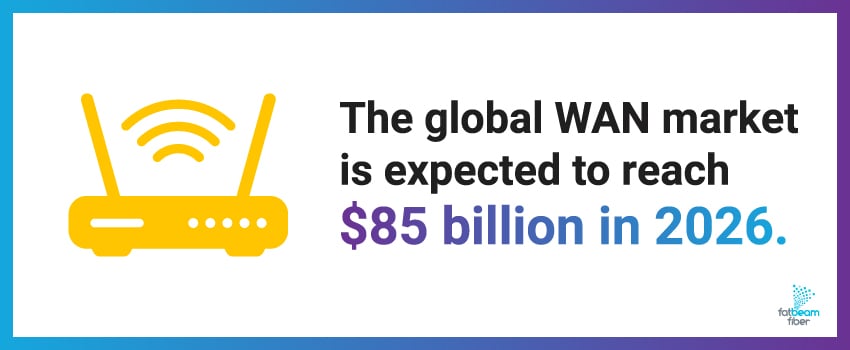
The global WAN market is expected to reach $85 billion in 2026,1 reflecting how important WAN infrastructure has become to enterprise operations. Organizations use private WANs to link offices in different locations, allowing distributed employees to share resources as if they were in the same building.
How WANs Work
WANs use several technologies to overcome the physical limitations that prevent LANs from extending beyond a single location, including:
- Fiber optic cables
- Leased lines
- MPLS (Multiprotocol Label Switching)
- VPNs
- Satellite links
At Fatbeam, we help businesses build WANs that actually work. Our Wavelength services and Dedicated Internet Access solutions deliver the dedicated, reliable connectivity your distributed teams depend on across the Western United States.
LAN vs WAN: 6 Key Differences
Most organizations don't realize how their choice between LAN and WAN impacts everything from team collaboration to customer experience. Here are the distinctions that directly impact your operations:
1. Geographic Scope
LANs connect a single building or office, which keeps everything close and manageable. WANs reach across cities, states, or continents, linking separate locations into one network. The scope you need depends on whether you're managing one office or coordinating teams spread across regions.
2. Ownership
With LAN, you own and control your network completely, from the routers to the cables running through your walls. WANs typically involve multiple providers and shared infrastructure, especially when you're using the public internet. Who controls what matters when it comes to security policies and troubleshooting responsibility.

3. Speed
LANs are fast because devices are physically close to each other. WANs move data over longer distances through more equipment, which naturally introduces latency. And every millisecond counts when you're running business-critical applications, as even a 100-millisecond increase in latency can reduce conversion rates by 7%.2
4. Cost
Setting up a LAN is relatively affordable because you're just buying switches, routers, and cables for nearby devices. WAN connections involve service providers and ongoing monthly costs, but you gain improved collaboration and access to cloud services that make the investment worthwhile.
5. Setup and Maintenance
Internal IT teams can handle LAN setup and maintenance in most cases. WANs demand coordination with service providers and specialized expertise, which means bringing in professional partners. However, modern WAN solutions like SD-WAN have made managing distributed networks much more accessible than it used to be.
6. Technology
LANs use Ethernet and Wi-Fi because they're simple and cost-effective. WANs pull from a wider toolkit, such as fiber optics, MPLS, leased lines, and VPN connections. Each offers different performance characteristics and costs, so it’s important to choose the right one depending on your bandwidth needs and budget.
WAN vs LAN Port: What's the Difference?
If you've looked at the back of a router, you've noticed different port labels. Understanding the LAN vs WAN port distinction is essential for setting up your network correctly.
What Is a WAN Port?
A WAN port (sometimes labeled "Internet") is where your modem or internet service connection plugs into your router. This port receives the internet signal from your provider and brings external connectivity into your network.
Most routers have one WAN port, with the WAN cable connecting from your modem's output to your router's WAN port.
What Is a LAN Port?
LAN ports are the multiple Ethernet ports on your router used to connect local devices like computers, gaming consoles, and network printers. A typical home router has four LAN ports, while business equipment offers eight, sixteen, or more.
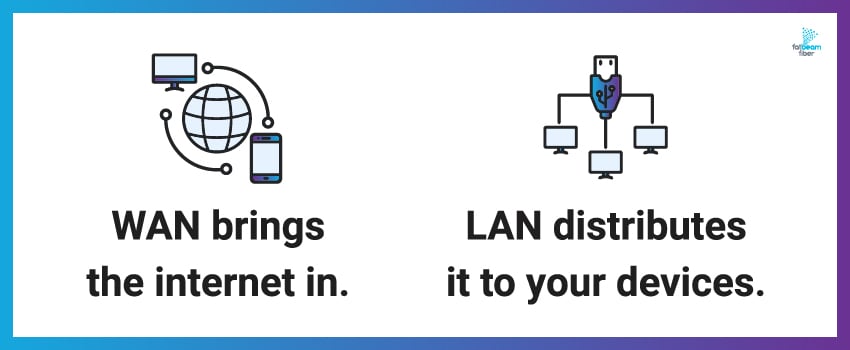
The fundamental WAN vs LAN port difference is that WAN brings the internet in, and LAN distributes it to your devices.
How LAN and WAN Work Together
In modern networks, LAN and WAN work together seamlessly. Your office computer connects to a local switch (LAN), which connects to your router. The router's WAN port connects to a fiber modem from your internet provider, joining your LAN to the broader WAN.
For multi-location businesses, each office maintains its own LAN, but they're all connected through a WAN that allows employees to access shared resources regardless of location.
At Fatbeam, our dark fiber solutions provide businesses with ultimate WAN flexibility – you control the entire connection between your locations using your own networking equipment.
Build the Right Network With Fatbeam
LANs and WANs aren't competing technologies – they're complementary pieces of one system working together. Your LAN keeps your local operations running, but your WAN is where the real competitive advantage lives. When you invest in fiber-based WAN infrastructure, you're building a foundation strong enough to support growth.
That's what Fatbeam does. We help businesses across the Western U.S. build high-capacity, cost-effective WAN infrastructure that delivers:
- 99.99% network uptime
- 55 ms latency guarantee
- <1% packet loss
Ready to build a network that supports your business goals? Reach out to Fatbeam today to see how our fiber solutions can deliver the LAN and WAN performance your organization deserves.
Sources: