Internet decisions look different depending on where you're sitting. A parent managing a household might only care that everyone can stream and work from home without conflicts, while a small business owner will prioritize productivity and whether their team can collaborate without connection problems. Regardless of your situation, you're probably asking the same question: how much speed do I need, and am I paying for the right plan?
As of March 2026, the average fixed broadband download speed in the United States is 309.80 Mbps, with an average upload speed of 56.82 Mbps.1 But these averages tell you very little about what your household or business specifically needs. The only way to find the right speed is to understand what you're actually doing with your internet and how much bandwidth those activities consume.
In this guide, we'll break down what a good internet speed is, explain the difference between download vs upload speed, and help you determine the right speeds for your needs.
What Is a Good Download Speed?
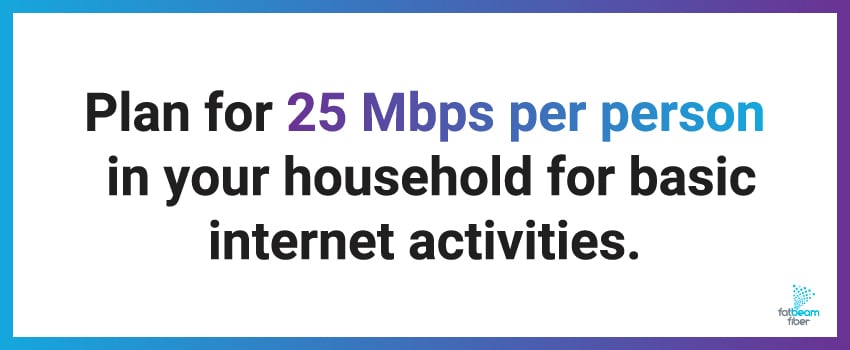
A good download speed will ultimately depend on how you use the internet. Plan for about 25 Mbps per person in your household for everyday activities like browsing, email, social media, and standard-definition streaming.
Here’s a quick overview of what different download speeds can support:
- 25-50 Mbps: Handles general use, including basic browsing, email, and SD streaming for 1-2 people.
- 100-200 Mbps: Supports high-definition (HD) streaming on multiple devices, video conferencing, and moderate file downloads for 2-4 people.
- 300-500 Mbps: Powers 4K streaming, online gaming, and large file downloads for 4-6 people.
- 500 Mbps-1 Gig: Ideal for large households or anyone who regularly downloads massive files and streams on multiple 4K devices.
- 2-5 Gigs: Support multiple simultaneous video conferences, heavy cloud usage, and server-grade reliability for business-critical operations.
Need to switch to a speed tier that suits your needs better? At Fatbeam, our fiber internet services deliver consistent, dedicated speeds that don't slow down during peak usage times.
Is 300 Mbps Fast?
Yes, 300 Mbps is fast enough for many households and small businesses. With this speed, you can download a 1 GB file in approximately 27 seconds, stream 4K video on multiple devices, support a family of four with everyone online at the same time, and add smart home devices without performance impact.
However, large households with 6+ people, homes with numerous smart devices, businesses with multiple employees, or power users who regularly transfer massive files might benefit from higher speeds.
What Is a Good Upload Speed?
People tend to overlook upload speeds when shopping for internet service, but it's becoming increasingly important. Here's what different upload speeds support:
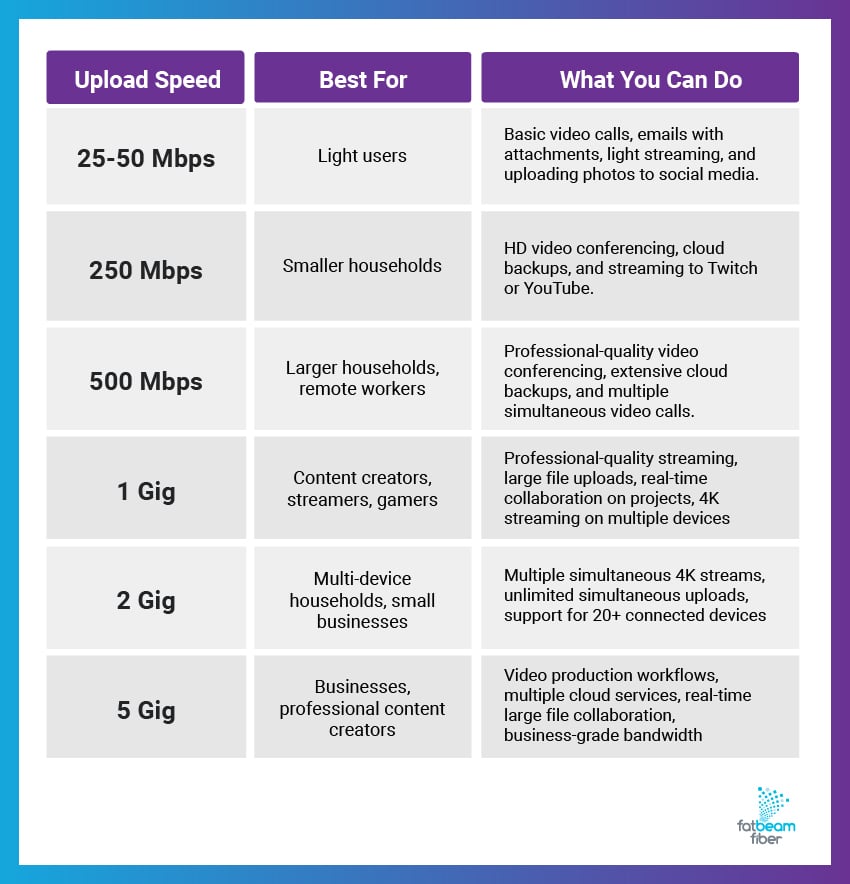
The average upload speed for cable internet typically ranges from 5-50 Mbps, which can create a bottleneck for businesses that perform upload-intensive activities. This is where fiber internet offers a significant advantage.
Download vs Upload Speed: What’s the Difference?
Download speed is how fast data travels from the internet to your device – streaming a movie, loading a webpage, or downloading a file all depend on download speed. This is the speed most advertised by internet providers and the one that impacts most daily activities.
Upload speed measures how fast data travels from your device to the internet – sending emails, posting to social media, video calling, or backing up files to the cloud all require upload bandwidth.
For most internet connections, download speeds significantly exceed upload speeds. A typical cable internet plan might offer 300 Mbps download but only 10-20 Mbps upload. While this asymmetry works fine for activities that primarily consume content, it can create frustration for anyone who uses a lot of data.
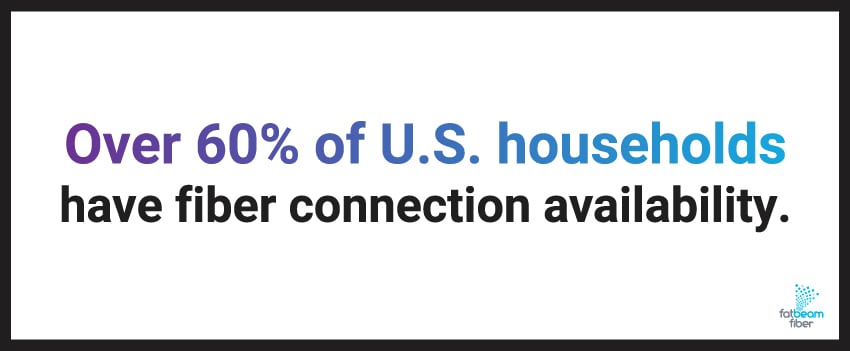
Fiber internet connections, including our services at Fatbeam, provide symmetrical speeds where upload matches download – eliminating the upload bottleneck entirely. And with the percentage of U.S. households with fiber connection availability passing 60% this year,1 it’s easier than ever to get a fiber plan that meets your specific needs. See if Fatbeam is available in your area today.
What Is Good Internet Speed for Different Activities?
Understanding what constitutes good internet speed becomes clearer when you match speeds to specific activities:
Remote Work and Video Conferencing
If you work from home, you already know how important reliable upload and download speeds are. Make sure to plan for at least 100-200 Mbps download and 25+ Mbps upload to avoid any connection issues during meetings, especially if multiple people in your home are working remotely.
Content Creation
Content creators need fast upload speeds. Uploading a 10-minute 4K video to YouTube can take hours with a 10 Mbps upload, but completes in 20-30 minutes with a 50 Mbps upload. Fatbeam’s dedicated internet access gives you a private connection, so you never have to compete with neighbors for bandwidth when uploading videos.
Streaming Entertainment
Netflix recommends speeds of 3 Mbps for standard definition, 5 Mbps for high definition, and 25 Mbps for 4K ultra HD per stream. This means that a household streaming 4K content on three devices while others browse will need at least 100+ Mbps download speeds to avoid any buffering annoyances.
What Are Good Download and Upload Speeds for Businesses?
Business internet requirements extend beyond residential needs. Companies should consider employee count, cloud application usage, VoIP phone systems, video conferencing frequency, and file server access.
- Small businesses with 5-10 employees typically need at least 250-500 Mbps download with symmetrical upload speeds to handle basic operations, video conferencing, and cloud applications without slowdowns.
- Mid-sized businesses with 10-25 employees should target 1 Gbps-2 Gbps with symmetrical upload speeds to support multiple simultaneous video conferences, heavier cloud application usage, and file transfers without impacting other operations.
- Larger businesses with 25+ employees should consider 2 Gbps-5 Gbps dedicated internet access with symmetrical upload speeds to ensure guaranteed bandwidth, lower latency, and the reliability required for business-critical operations.

At Fatbeam, our business fiber solutions provide guaranteed bandwidth with enterprise-grade service level agreements, so you always have the speeds your teams need to stay productive.
What's a Good Upload Speed for Internet-Based Services?
Upload speed becomes especially important for specific activities, including:
Cloud Storage and Backup
Uploading your photo library or backing up documents can take hours or days with slow upload speeds.
Video Calling
Choppy video and dropped connections during conference calls typically indicate insufficient upload bandwidth.
Live Streaming
Broadcasting 1080p video to Twitch or YouTube takes 6-8 Mbps upload speed, while 4K streaming can require 20-50 Mbps.
Online Collaboration
Real-time document editing and screen sharing depend on upload speed for smooth performance.
What Are Good Upload and Download Speeds Combined?
The best internet services provide balanced speeds that support both downloading and uploading – without bottlenecks. Here's what good upload and download speeds look like together:
- 250/250 Mbps: Perfect for smaller households and remote workers who need reliable symmetrical speeds for video calls, cloud backups, and everyday streaming without delays.
- 500/500 Mbps: Handles most household and small business needs comfortably, supporting multiple users, 4K streaming, content creation uploads, and large file transfers simultaneously.
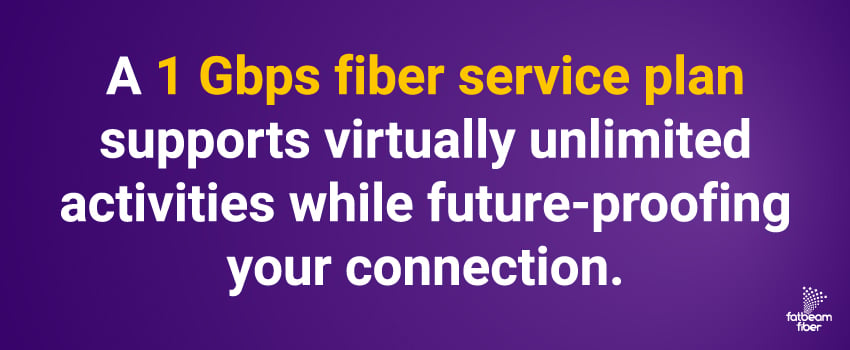
- 1 Gbps/1 Gbps: Ideal for larger households, professional content creators, and small businesses with demanding connectivity requirements, supporting unlimited simultaneous activities without compromise.
- 2 Gbps/2 Gbps: Powers multi-device households and small businesses, handling multiple simultaneous 4K streams, video conferencing, cloud applications, and professional workflows without any bandwidth constraints.
- 5 Gbps/5 Gbps: Built for growing businesses and demanding professional operations, offering guaranteed dedicated bandwidth, enterprise-grade reliability, and the performance needed for server-intensive applications and large-scale collaboration.
Every fiber internet plan from Fatbeam delivers these symmetrical speeds, which means that your upload performance always matches your download capability.
How To Determine the Speed You Need
Calculating your ideal internet speed involves a few steps:
Count Your Devices and Users
List everyone who uses the internet and all connected devices, including computers, phones, tablets, smart TVs, gaming consoles, and smart home devices.
Identify Peak Usage Patterns
Determine when the most people use the internet simultaneously and what they're doing during those times.
Add Up Bandwidth Requirements
Use the activity guidelines above to calculate the total needed bandwidth during peak usage.
Include Headroom
Add at least 20-30% extra capacity to account for multiple simultaneous activities and future needs.
Prioritize Upload if Needed
If you plan to upload large files, work from home, or create content, make sure your upload speed meets your requirements.
Choose the Right Internet Speed With Fatbeam
Whether you're wondering how to connect everyone in your household comfortably or determining the upload speed for your remote work setup, the answer depends on your usage patterns. Knowing what makes a good download and upload speed can help you choose an internet plan that matches your needs without overpaying for unused capacity.
At Fatbeam, we provide fiber internet connectivity across the Western U.S., designed to deliver the consistent, reliable speeds modern life demands. Our residential fiber services offer symmetrical speeds that ensure uploads keep pace with downloads – and our local techs are always here to help if you need us.
Ready to get started with internet speeds that actually meet your needs? Contact Fatbeam today to explore our fiber options.
Sources: