Global internet traffic reached 521.9 exabytes per month in 2025, marking a 16.2% increase from 20241 – and this growth doesn’t show any signs of slowing down.
Multiplexing is the technology that makes all of this data movement possible. It's what allows multiple data streams to travel together over a single cable, sharing bandwidth intelligently while maintaining the speed and reliability your business operations demand.
But what is multiplexing in networking, and how does it enable high-performance connections? In this guide, we'll explain everything you need to know about how this technology powers the enterprise connectivity we provide at Fatbeam.
TL;DR
- Multiplexing combines multiple data streams so they can share a single communication channel efficiently.
- Common multiplexing techniques include FDM, TDM, WDM, and CDM, each separating signals in a different way.
- Demultiplexing separates the combined signal at the receiving end so each stream reaches the right destination.
- Multiplexing also happens at higher network layers, where TCP, UDP, and port numbers help organize application traffic.
What Is Multiplexing?
Multiplexing combines multiple data streams into one transmission channel. Instead of requiring separate cables for each data stream, multiplexing enables more efficient infrastructure use by dividing the available bandwidth among multiple signals.
Here’s a simple way to think of it: Imagine a telephone cable that can only handle one phone call at a time. You would need a separate cable running to every phone line in the building. Multiplexing takes that cable and divides it so that many conversations can happen at the same time without interfering with each other.
Multiplexing keeps your physical infrastructure the same while dramatically increasing its capacity. For businesses, this means more data can travel over the same fiber optic cable or wireless connection without degrading performance for your teams or customers.
How Does Multiplexing Work?
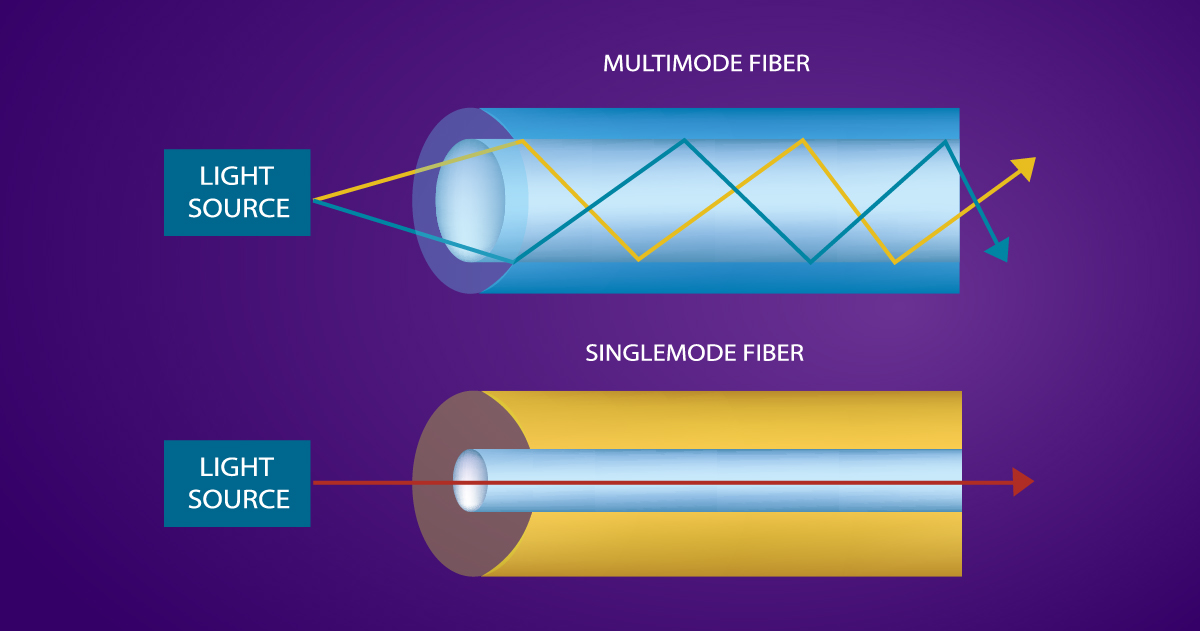
Multiplexing works by taking multiple input signals and combining them using a multiplexer (often called a "mux") at the transmission end. These combined signals travel together across a single communication channel. At the receiving end, a demultiplexer separates the combined signal back into the original individual streams.
Each data stream maintains its integrity throughout transmission while sharing bandwidth with other signals. Different multiplexing techniques achieve this in different ways – some divide the available bandwidth by frequency, others by time slots, and some use wavelength division in optical networks.
The specific multiplexing technique used depends on the:
- Type of signal being transmitted
- Available bandwidth
- Transmission medium
- Performance requirements of your network
At Fatbeam, our fiber-based network solutions leverage advanced multiplexing technologies to deliver dedicated bandwidth that scales with your business needs.
Multiplexing vs. Demultiplexing
Multiplexing and demultiplexing are two sides of the same transmission process. Multiplexing happens before data travels across the communication channel. It takes separate data streams and combines them into one signal so they can share the same cable, fiber strand, or wireless connection.
Demultiplexing happens at the receiving end. Once the combined signal reaches its destination, the demultiplexer separates it back into the original data streams so each one can be delivered where it needs to go.
Without demultiplexing, the receiving device would see one combined signal but would not know how to separate each stream correctly. That separation is what allows multiple applications, users, or services to share the same network infrastructure without their traffic becoming mixed together.
Techniques of Multiplexing
Let’s explore the main multiplexing techniques you’ll see used in data communications networks:
Frequency Divisfation Multiplexing (FDM)
Frequency Division Multiplexing divides available bandwidth into separate frequency bands, with each signal assigned to a specific frequency range. All signals transmit simultaneously but occupy different frequencies, preventing interference.
FDM is used in analog communications like radio broadcasting and cable television. Guard bands – unused frequency spaces between channels – prevent signals from overlapping and causing crosstalk.
Time Division Multiplexing (TDM)
Time Division Multiplexing allocates all of the bandwidth to each signal for brief, fixed time slots. Signals take turns using the channel, with each connection occupying a specific time slot in a repeating cycle.
TDM comes in two main forms:
- Synchronous TDM assigns fixed time slots to each input source, regardless of whether data is being transmitted. This approach is simple but can waste bandwidth when sources have no data to send.
- Statistical TDM dynamically allocates time slots based on demand, only assigning bandwidth when sources have data to transmit. This increases efficiency and makes better use of available capacity.
Wavelength Division Multiplexing (WDM)
Wavelength Division Multiplexing is the most powerful multiplexing technique, but it’s only used in fiber optic communications. WDM combines multiple optical signals onto a single optical fiber using different wavelengths of light.
WDM comes in several variants:
- Dense Wavelength Division Multiplexing (DWDM) packs numerous wavelengths close together – often 80 or more channels – onto one fiber to maximize capacity for high-capacity long-haul networks.
- Coarse Wavelength Division Multiplexing (CWDM) supports up to 18 channels with wider spacing. While it offers less capacity than DWDM, it’s also less expensive and works well for shorter distances.
Our Wavelength services at Fatbeam leverage WDM technology to provide dedicated, high-bandwidth connections that scale from gigabit to 100 Gbps and beyond.
Code Division Multiplexing (CDM)
Code Division Multiplexing assigns a unique code to each data stream. All signals transmit over the same frequency, but each uses its own distinct code for identification. CDM is primarily used in wireless communications, including cellular networks and GPS systems.
Multiplexing in the OSI Model
Multiplexing is often discussed in terms of cables, fiber strands, frequencies, time slots, and wavelengths. But it is not limited to the physical layer of a network. Multiplexing also happens at higher layers of the OSI model, where software and protocols help organize traffic before it moves across the network.
At the physical layer, multiplexing allows multiple signals to share the same transmission medium. This is where techniques like FDM, TDM, WDM, and CDM come into play. They help make better use of available infrastructure by allowing more data to move through the same channel.
At higher layers, multiplexing helps different applications and services share the same network connection without interfering with one another. This is especially important in modern business environments, where video calls, cloud platforms, email, file transfers, and web traffic may all be running at the same time.
The result is the same basic principle applied in different ways: multiple data streams share one path, while the network keeps each stream organized from source to destination.
Transport Layer Multiplexing: TCP, UDP & Port Numbers
At the transport layer, multiplexing is handled by protocols like TCP and UDP. These protocols allow multiple applications on the same device to use the network connection at the same time.
For example, someone in your business might be using a web browser, email platform, cloud application, and video conferencing tool all at once. Each application sends and receives data, but that traffic still moves through the same network connection. Transport layer multiplexing keeps those streams organized so the right data reaches the right application.
Port numbers make this possible. They act like labels that identify which application or service each data stream belongs to. When traffic arrives, the receiving system uses those port numbers to separate the data and route it correctly.
This type of multiplexing is different from WDM or TDM, but it serves a similar purpose. It helps multiple streams share network resources efficiently while keeping each connection distinct and usable.
What Are the Benefits of Multiplexing Techniques for Businesses?
Multiplexing techniques directly impact your network, and using the right one for your needs delivers benefits like:
- Bandwidth Efficiency: Multiplexing allows more data to travel over the same infrastructure, maximizing network investments. Instead of installing multiple cables, businesses can expand capacity through advanced multiplexing.
- Cost Reduction: By sharing infrastructure among multiple data streams, multiplexing reduces redundant hardware and cabling costs.
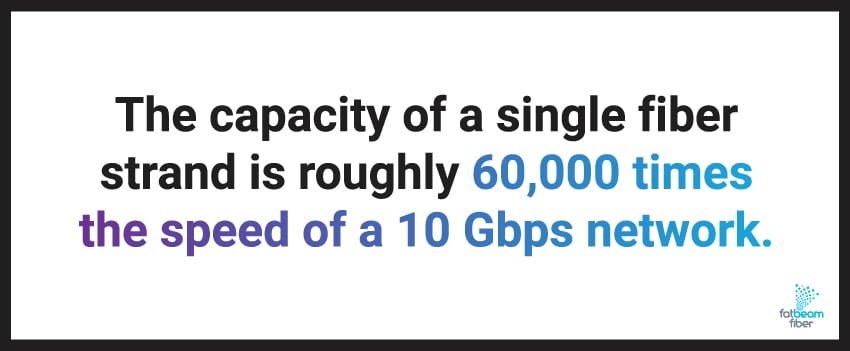
- Easy Scalability: Tech like WDM offers virtually unlimited scalability, considering the capacity of a single strand of standard single-mode fiber is estimated at over 600 terabits per second – roughly 60,000 times the speed of today's 10 Gbps networks.2
- Future-Proof Infrastructure: Because multiplexing allows you to increase capacity through equipment upgrades alone, your fiber investment remains valuable for decades.
- Reliability and Redundancy: Multiplexing lets businesses diversify data paths across multiple wavelengths or time slots. If one channel experiences issues, traffic can be rerouted instantly without interrupting service.
- Improved Performance: Modern multiplexing techniques minimize latency and give each data stream the needed bandwidth to support applications like video conferencing and cloud services.
At Fatbeam, we've built our network to leverage these multiplexing advantages. Our Dedicated Internet Access solutions provide guaranteed bandwidth, while our wavelength services offer point-to-point connectivity with dedicated capacity.
Optimize Your Network Infrastructure With Fatbeam
Multiplexing works every second of the day to move trillions of data packets through shared infrastructure without conflict or degradation. Without it, modern business wouldn't just be slower – it wouldn't even exist in its current form.
At Fatbeam, we use advanced multiplexing technologies throughout our fiber network across the Western United States. Whether you need dedicated internet access, wavelength services for point-to-point connectivity, or dark fiber to build your own customized network, we deliver the bandwidth and reliability your business requires.
Ready to see how the right network technologies can support your business growth? Contact the Fatbeam team today.
Multiplexing in Networking FAQs
What Is Multiplexing In Simple Terms?
Multiplexing is a way to send multiple data streams through one shared communication channel. Instead of using a separate cable, fiber strand, or wireless path for every signal, multiplexing combines those signals so they can travel together without interfering with each other.
Why Is Multiplexing Important In Networking?
Multiplexing helps networks use available bandwidth more efficiently. It allows more data to move across existing infrastructure, which can reduce the need for additional cabling, improve scalability, and support high-demand applications like cloud platforms, video conferencing, and large file transfers.
What Is The Difference Between Multiplexing And Demultiplexing?
Multiplexing combines multiple data streams before they travel across a shared channel. Demultiplexing happens at the receiving end, where the combined signal is separated back into its original streams so each one reaches the correct destination.
What Are The Main Types Of Multiplexing?
The main types of multiplexing include Frequency Division Multiplexing, Time Division Multiplexing, Wavelength Division Multiplexing, and Code Division Multiplexing. Each method separates signals in a different way, such as by frequency, time slot, wavelength, or code.
How Is Multiplexing Used In Fiber Optic Networks?
In fiber optic networks, multiplexing is commonly used through Wavelength Division Multiplexing. WDM allows multiple optical signals to travel through a single fiber strand using different wavelengths of light, helping businesses increase capacity without adding more fiber.
Is Multiplexing Only Used At The Physical Layer?
No. Multiplexing is often discussed in relation to physical infrastructure, but it also happens at higher layers of the network. At the transport layer, protocols like TCP and UDP use port numbers to keep traffic from different applications organized over the same network connection.
How Does Multiplexing Help Businesses?
Multiplexing helps businesses get more capacity from their network infrastructure. It can support better bandwidth efficiency, reduce unnecessary hardware and cabling costs, and make it easier to scale connectivity as data demands grow.
Does Multiplexing Affect Network Performance?
Multiplexing is designed to improve how network resources are used. When implemented correctly, it allows multiple data streams to share the same channel while maintaining reliability, speed, and separation between signals.
Sources: