Need fast, reliable internet for your business? Network infrastructure makes it happen, and backhaul is the unsung hero working behind the scenes to keep your network connected. Let's explore how backhaul keeps your business running smoothly and what it means for your daily operations.
TL;DR
- Backhaul is the middle-layer infrastructure that carries data from local access points like cell towers and business networks to the core network and internet.
- Strong backhaul determines whether your cloud apps, VoIP, and video calls actually feel fast and reliable, no matter how good your local Wi-Fi or wireless signal looks.
- Most modern business backhaul runs on fiber or carrier-grade Ethernet, while microwave and satellite cover the cases where laying cable isn't practical.
- Modern 5G networks split the radio-to-core path into three segments (fronthaul, midhaul, and backhaul), each with different capacity and latency requirements.
What Is Backhaul?
In networking, backhaul is the infrastructure that connects a local network – such as a cell tower, business network, or WiFi hotspot – to a core network like an internet backbone or data center. It acts as the middle layer of communication between end-users and the broader internet.
How Does a Backhaul Network Work?
A backhaul network transports data from the "last mile," which is the connection between a local network and the end-user, to the "core network," where internet and cloud-based services are managed.
This process involves:
- Data Transmission: A user connects to a local access point, such as a WiFi router or cell tower.
- Traffic Routing: The data is sent through a backhaul connection (fiber, microwave, or satellite) to a central hub or internet exchange point.
- Data Processing: The backhaul network hands off the data to a core network, where it’s processed and forwarded to its final destination.
Ultimately, backhaul network traffic ensures your organization’s digital communications can travel efficiently and securely across large distances.
Benefits of Backhaul
Strong backhaul gives your network the capacity, reliability, and responsiveness it needs to support modern business operations. It is the part of the network that helps cloud apps, VoIP, video meetings, and multi-site connectivity feel fast and consistent, not just connected.
Faster Application Performance
Backhaul helps move traffic from your local network to the core network efficiently. When that connection has enough capacity, cloud platforms, file transfers, hosted desktops, and video calls can run with fewer delays and interruptions.
Better Reliability Across Locations
A well-designed backhaul network gives data a stronger path between offices, data centers, towers, and internet exchanges. This helps reduce bottlenecks and keeps business traffic moving even as users, devices, and applications increase.
Lower Latency for Real-Time Tools
Voice, video, collaboration tools, and other real-time applications depend on low delay. Fiber backhaul helps reduce latency, so calls stay clear, meetings feel smoother, and teams can work without constant lag.
More Room to Scale
As your business adds locations, cloud tools, mobile users, or bandwidth-heavy applications, your backhaul needs to grow with it. Strong backhaul gives your network a better foundation for future demand, so performance does not fall behind your business needs.
Fronthaul vs Midhaul vs Backhaul: What's the Difference?
Modern mobile networks, especially 5G, don't have a single "tower-to-core" connection. They split that path into three segments: fronthaul, midhaul, and backhaul. Each one handles a different part of the journey from the radio antenna to the core network, with different capacity and latency requirements.
Fronthaul
Fronthaul is the connection between the radio unit (RU) at the top of a cell tower and the distributed unit (DU) that processes the signal. It's the shortest segment, but the most demanding: it has to carry raw radio data with extremely low latency, often well under a millisecond. Fronthaul almost always runs on fiber because nothing else delivers the bandwidth required to keep up with the signal traffic.
Midhaul
Midhaul is a newer segment, introduced with 5G's Cloud RAN (C-RAN) and Open RAN (O-RAN) architectures. It connects the distributed unit (DU) to a centralized unit (CU), which may sit at a regional aggregation site rather than at the tower itself. Midhaul lets carriers centralize processing for multiple cell sites, which reduces equipment costs at each tower and improves coordination between them. Latency requirements are tighter than backhaul but looser than fronthaul.
Backhaul
Backhaul is the segment most people are familiar with: the connection from the centralized unit, or directly from an aggregation point, to the core network. It carries traffic from one or more cell sites back to the carrier's data center, where calls get routed and internet traffic reaches its destination. Capacity matters most here, not microsecond-level latency.
Why The Distinction Matters
Splitting the radio-to-core path into three segments lets carriers design each piece independently. Fronthaul gets the highest-capacity fiber. Midhaul can use slightly cheaper transport. Backhaul focuses on long-distance efficiency. For network operators planning 5G deployments, knowing which segment you're optimizing for changes which technology and which provider makes sense.
Types of Backhaul Networks
There are several types of backhaul networks, each with its own advantages and potential downsides. Here’s a quick breakdown of the primary backhaul network types:
Fiber Optic Backhaul
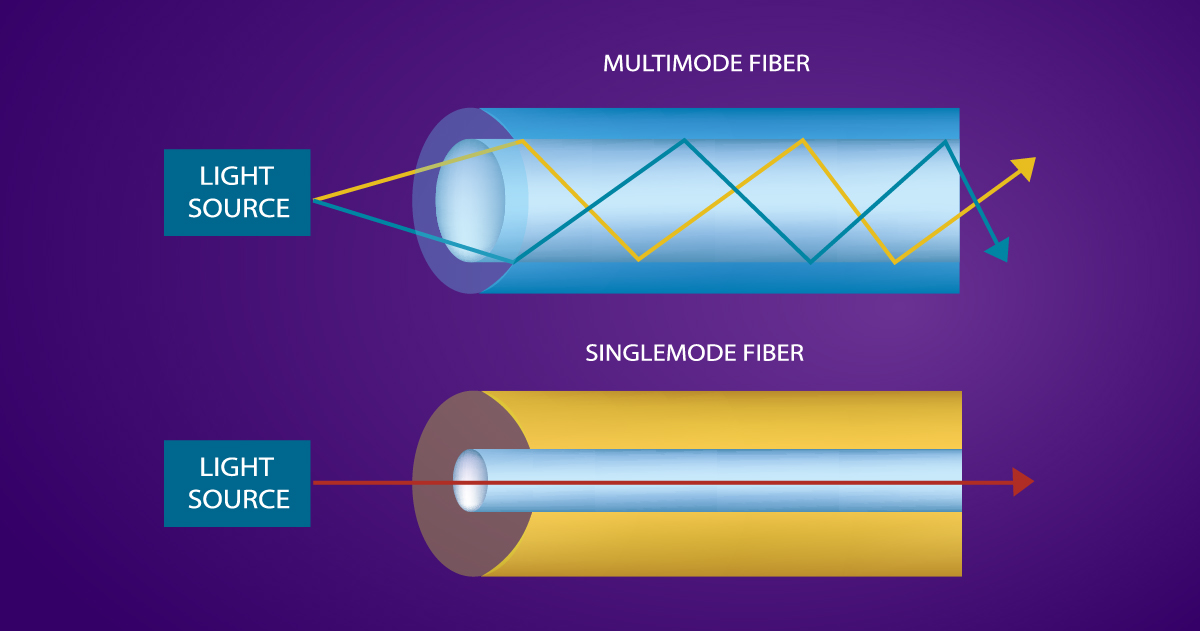
Fiber optic backhaul uses thin glass cables to carry your data using pulses of light, offering the fastest speeds and most reliable service available. Businesses, data centers, and telecom providers typically use a fiber backhaul because it can handle massive amounts of data while keeping delay times low.
Ethernet Backhaul
Ethernet backhaul uses carrier-grade Ethernet connections, typically running over fiber, to move data between business sites or back to a central data center. Businesses with multiple locations often choose it through services like Metro Ethernet or Ethernet Virtual Private Line (EVPL) because it scales from 1 Gbps to 100 Gbps and delivers predictable performance across every site.
Microwave Backhaul
Microwave backhaul is valuable in areas where running fiber cables isn't practical. It’s a wireless solution that creates direct connections between network points using microwave signals. While it offers decent speeds, keep in mind that rain, snow, or other weather conditions might affect its signal quality.
Satellite Backhaul
Satellite backhaul delivers internet connectivity to even the most remote locations. It bounces signals off satellites orbiting Earth, making it perfect for rural or hard-to-reach areas where other options aren't available. While satellite backhaul works anywhere with a view of the sky, it typically provides slightly slower speeds and lower latency compared to fiber or microwave options.
Why Is Fiber Backhaul Important for Businesses?
Backhaul plays a major role in ensuring high-speed, reliable business connectivity. A few benefits of fiber backhaul networks include:
Support for High Bandwidth Demands
Your employees rely on bandwidth-intensive cloud apps, video conferencing, and mobile capabilities every day. A fiber backhaul network can help your internet traffic flow smoothly, preventing the frustration of network congestion and slowdowns that impact productivity.
Improved Network Reliability
A well-designed fiber backhaul network gives your business multiple paths for data transmission. If one connection experiences issues, your data simply takes another route, keeping your operations running without missing a beat.
Reduced Latency
When you use real-time applications like VoIP and online collaboration tools, every second counts. Fiber backhaul networks minimize delays to give your teams the fast, uninterrupted performance they need to perform their jobs well.
Enhanced Security
Modern backhaul networks come with advanced security features that help keep your sensitive business data safe. Think of it as an extra shield protecting your information as it moves between locations.
5G and Wireless Network Enablement
5G networks depend on fiber backhaul to handle the incredible amount of data traffic they generate. If your business depends on mobile connectivity to support hybrid or on-the-go workers, you'll appreciate the improved speeds and responsiveness that come with strong backhaul infrastructure.
Backhaul Networking Examples in Real Life
Backhaul shows up anywhere local users, devices, or access points need to connect back to a larger network. You may not see it directly, but it is the infrastructure that keeps everyday digital services moving beyond the local connection.
Cell Towers and Mobile Networks
When someone makes a call, streams video, or uses mobile data, their phone connects to a nearby cell tower first. Backhaul carries that traffic from the tower to the carrier’s core network, where it can be routed to the internet or another user.
Multi-Location Businesses
A business with several offices may use backhaul to connect each location to a central data center, cloud environment, or headquarters network. This helps teams access shared applications, files, and communication tools from different sites.
Public WiFi Networks
Airports, schools, hotels, and large venues often use WiFi access points to connect users locally. Backhaul moves that traffic from the local WiFi network to the internet backbone, so users can actually reach cloud apps, websites, and online services.
Rural Internet Access
In remote areas, backhaul may connect small towns, local providers, or wireless access points to a larger fiber network. When fiber is not practical, microwave or satellite backhaul can help bridge the gap and bring connectivity to harder-to-reach locations.
4 Steps for Managing Backhaul Network Traffic
Managing your backhaul network traffic becomes more important – and more complex – as your network grows. Here are some steps you can take to optimize your traffic:
1. Implement QoS Policies
Quality of service (QoS) policies help you put your most important network traffic first. This means high-priority apps like video calls and cloud platforms get priority over less time-sensitive data like background downloads.
2. Use SD-WAN for Intelligent Traffic Routing
Software-Defined Wide Area Networking (SD-WAN) makes your backhaul smarter. It automatically picks the best path for your data, giving you better performance and fewer delays.
3. Monitor and Optimize Bandwidth Usage
Regular network monitoring can help ensure your backhaul capacity is aligned with your business needs. When your traffic demands increase, you can adjust your network accordingly.
4. Invest in Fiber Backhaul
If your business needs fast, responsive connections, fiber backhaul offers the best long-term solution. It helps you avoid bandwidth limitations while preparing your network for future growth.
What’s the Right Backhaul Solution for Your Business?
Choosing the right backhaul network for your business depends on several factors. Here’s how backhaul networks compare:
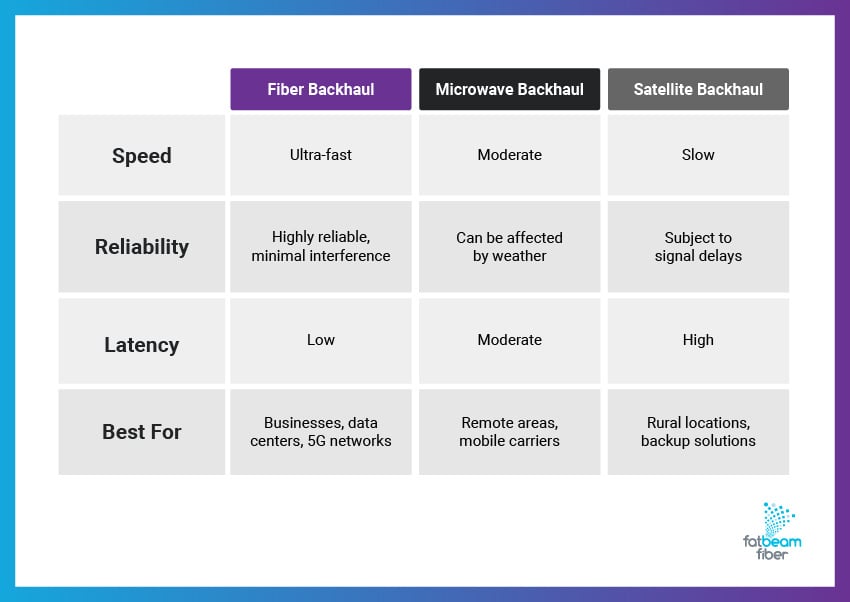
For businesses that depend on uninterrupted, high-speed connectivity, fiber backhaul is the best option. However, if your business operates in rural or hard-to-reach areas, microwave or satellite backhaul might be the most practical solution.
Power Your Business With Fatbeam’s Backhaul Solutions
Your business needs reliable backhaul infrastructure to thrive in our connected world. The right backhaul network helps you maintain smooth operations, support your remote workforce, and secure your data. Whether you choose fiber, microwave, or satellite backhaul, this critical infrastructure forms the foundation of your business connectivity.
At Fatbeam, we offer fiber backhaul solutions backed by impressive numbers: 99.99% network availability, 55ms latency, and less than 1% packet loss. Whether you need a dedicated backhaul network or are looking to optimize backhaul network traffic, our fiber solutions help you scale and integrate new technologies seamlessly.
Ready to enhance your business’s network infrastructure? Contact us today to learn more about our fiber backhaul services.
FAQs
What is an example of a backhaul connection in networking?
A common backhaul example is the connection between a cell tower and the mobile carrier's data center. When you stream video on your phone, your device first connects to the tower (the access network), but the tower needs a high-capacity link to send your data to the core network. That link is the backhaul. Other examples include the fiber line connecting an internet exchange to a local broadband provider, or the dedicated circuit linking a multi-site business back to its headquarters.
Why is backhaul important for business networks?
Backhaul carries every byte of data your business sends or receives. If it's slow, undersized, or unreliable, your cloud apps lag, your video calls drop, and your VoIP gets choppy, no matter how strong your local Wi-Fi looks. Strong backhaul also lets you scale. As you add users, locations, or applications, backhaul capacity has to grow with you. Investing in fiber backhaul early avoids the cost of ripping and replacing later when traffic outgrows the network.
What is the difference between backhaul and the access network?
The access network is what users and devices connect to directly: your Wi-Fi, your office Ethernet, a cell tower's radio. Backhaul is what sits behind it, carrying traffic from the access layer back to the core network and the internet. A simple way to think about it: the access network gets you connected, and backhaul moves your data where it needs to go. Both matter, but backhaul often decides whether the connection actually feels fast and reliable.
What is 5G backhaul and why does it matter for mobile?
5G backhaul is the high-capacity connection between a 5G cell site and the carrier's core network. It matters because 5G generates significantly more traffic per cell than 4G, and small-cell deployments add many more sites that all need backhaul. Without enough capacity behind each tower, 5G's faster speeds and lower latency never reach the end user. Fiber backhaul is the standard choice for 5G because it handles the bandwidth and latency the technology requires.
What is the difference between fronthaul and backhaul?
Fronthaul connects a cell tower's radio equipment to the unit that processes the signal, usually within the same site or a few miles away. It carries raw radio data and requires extremely low latency, often well under a millisecond. Backhaul connects that processing unit, or an aggregation point, to the carrier's core network. It handles longer distances and prioritizes capacity over microsecond-level latency. In a modern 5G network, both segments work together, with a third segment called midhaul sitting between them.
How does cellular backhaul work in mobile networks?
Cellular backhaul carries traffic from a cell tower to the mobile carrier's core network. When your phone connects to a tower, the tower receives your data over the air, then sends it through backhaul, usually a fiber line, to a regional data center, where it's routed to its final destination. Without strong cellular backhaul, even a strong wireless signal can result in slow speeds or dropped calls because the bottleneck happens behind the tower, not at it.
Is wired backhaul better than wireless backhaul?
Wired backhaul, especially fiber, is usually the better choice when you need maximum bandwidth, low latency, and predictable performance. It's the standard for enterprise sites, data centers, and 5G deployments. Wireless backhaul (microwave or satellite) wins when laying cable isn't practical: remote locations, temporary sites, or backup paths to protect against outages. Most well-designed networks use both, with fiber as the primary path and wireless as redundancy or for hard-to-reach sites.
Can backhaul affect cloud application performance?
Yes. Cloud apps depend on the path between your users and the cloud provider, and backhaul is a big piece of that path. If your backhaul connection is congested or has high latency, cloud apps will load slowly, video meetings will lag, and real-time tools like VoIP or hosted desktops will feel inconsistent. Strong backhaul keeps that traffic moving smoothly, which is especially important for businesses that depend on multiple cloud platforms across multiple locations.
What is satellite backhaul and how does it work?
Satellite backhaul uses orbiting satellites to carry data between a remote site and a central network, with no physical cables required. A ground station at the remote location sends data up to a satellite, which relays it down to a station connected to the core network. It's the right choice for areas where fiber and microwave aren't feasible: rural sites, offshore locations, or disaster recovery setups. The tradeoff is higher latency and slower speeds compared to fiber or microwave backhaul.
Do I need backhaul infrastructure for my business?
If your business has multiple locations, depends on cloud applications, or supports any kind of remote or hybrid work, you already rely on backhaul, whether you think about it that way or not. Every internet connection includes a backhaul segment somewhere along the path. The real question is whether the backhaul behind your connection is strong enough for what you do. Businesses that need consistent speeds, low latency, and high uptime usually invest in dedicated fiber backhaul rather than relying on shared infrastructure.