Choosing an internet connection used to mean picking between cable and DSL. Today, the more interesting comparison for many homes and businesses is fixed wireless vs fiber – two very different technologies that both promise fast, reliable connectivity, but deliver on that promise in very different ways.
Marketing claims don't tell you what matters when it comes to picking the right connection type for your situation. You need to understand how each one works, where it excels, and what tradeoffs come with it. In this guide, we'll compare fiber and fixed wireless across speed, reliability, cost, and availability so you can make an informed choice.
What Is Fixed Wireless Internet?
Fixed wireless delivers broadband using radio signals transmitted from a nearby tower to a receiver at your home or business – usually on your roof or exterior wall. It requires a clear line of sight between the transmitting tower and your receiver, plus you need to be close enough to that tower's coverage area.
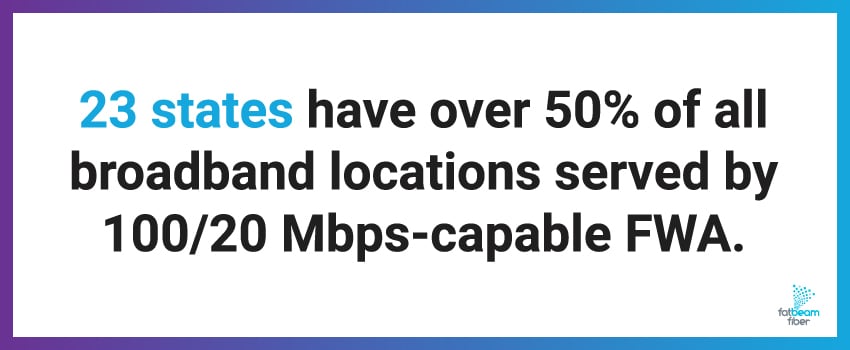
Unlike mobile wireless service that travels with you, fixed wireless connects one specific location to the network. Because it’s quick and easy to deploy, fixed wireless has become especially popular in areas where running physical cable would be expensive or logistically impossible. According to a 2026 report by the FCC, 23 states now have more than half of locations served by FWA capable of 100/20 Mbps.1
What Is Fiber Internet?
Fiber internet sends data as pulses of light through thin glass or plastic strands, rather than via radio waves or electrical signals. This gives fiber quite a few advantages over traditional internet options, especially when it comes to speed and reliability.
Fatbeam’s fiber internet services deliver symmetrical speeds through dedicated fiber optic infrastructure. That means your connection won’t fluctuate based on weather, distance from a tower, or whatever your neighbors are doing when they’re online at the same time.
Fixed Wireless vs Fiber: Speed and Performance
When comparing fixed wireless vs fiber head-to-head, speed and performance are where the biggest differences show up:
Speed
Fixed wireless internet typically offers download speeds that range from 25 to 100+ Mbps, and the upload speeds are considerably lower – often 10 to 50 Mbps. These speeds work fine for everyday browsing, email, and casual streaming, but can struggle under heavier demands.
Fiber delivers symmetrical speeds of 100 Mbps to 1 Gbps or higher, with enterprise connections scaling to 10 Gbps and beyond. This symmetry means your upload speed matches your download speed, which is a major advantage for video conferencing, cloud backups, and remote work.
Latency
Latency, which is the time it takes data to travel to its destination and back, is another differentiator in fiber’s performance. Fixed wireless connections usually show latency between 20 and 50 milliseconds, while fiber can deliver latency under 10 milliseconds. That makes it noticeably more responsive for video calls, online gaming, and VoIP phone systems.
Fixed Wireless Access vs Fiber: Environmental Factors
Fixed wireless signals travel through open air, leaving them susceptible to interference from heavy rain, snow, wind, and physical obstructions like trees or new construction that blocks the tower’s line of sight.
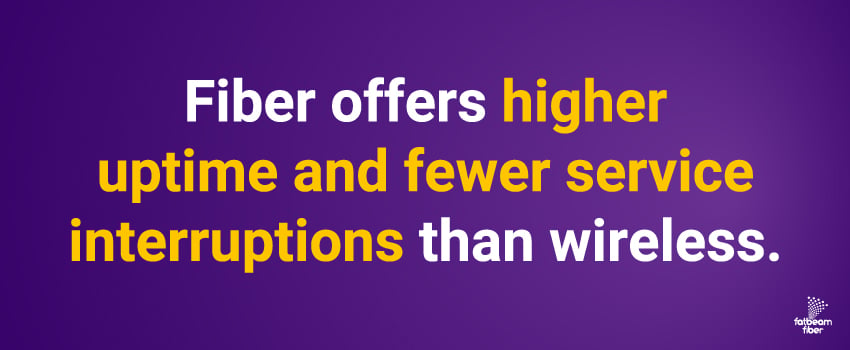
Fiber optic cables are buried underground or run overhead, so they’re immune to weather and electromagnetic interference. While they can occasionally be damaged during construction accidents, fiber generally offers higher uptime and fewer service interruptions than wireless alternatives.
Fixed Wireless Internet vs Fiber: Installation and Availability
One area where fixed wireless internet vs fiber comparisons favor wireless technology is deployment speed. Fixed wireless installations typically take just one to three days, since providers simply need to mount a receiver and connect it to the nearest tower – no digging or cable-laying required.
Fiber installation takes longer, often one to two weeks or more, since it can involve trenching and connecting to the broader network. But once it's in place, fiber delivers dramatically better performance and requires almost no ongoing maintenance. Wireless equipment, on the other hand, may need periodic upgrades as towers are refreshed or as interference issues emerge.
However, fixed wireless does offer an advantage where fiber hasn't been built out. At Fatbeam, our residential wireless internet service extends connectivity to locations our fiber network hasn't reached yet – so more households can access reliable broadband while we continue expanding our fiber footprint.
How To Compare Cost of Fixed Wireless vs Fiber Internet
When you compare the cost of fixed wireless vs fiber internet, the upfront numbers often favor wireless, though the full picture is more nuanced.
Fixed wireless plans can run anywhere from $30 to over $100 per month,2 with equipment often included and minimal installation fees. Fiber plans generally range from $50 to $150+ per month for residential service,3 sometimes with equipment rental costs added, though many providers – including Fatbeam – include it as part of the service.
However, your cost comparisons should account for value per dollar, not just the sticker price.
- Fiber's faster speeds and reliability often make it the better long-term investment, especially for households with several users or remote workers.
- A fixed wireless plan might cost less monthly but leave you paying for speeds that can't keep up with what your household actually needs.
This math shifts even further toward fiber for businesses. Fatbeam’s dedicated internet access solutions provide guaranteed, uncontended bandwidth that scales with your organization, so organizations get consistent performance that supports productivity and revenue-generating operations.
5G Fixed Wireless Access vs Fiber: Pros and Cons
5G technology has made fixed wireless a much more viable broadband option, so the 5G fixed wireless access vs fiber pros and cons are increasingly relevant for residential and business customers alike. Let’s take a look below:
Pros of 5G Fixed Wireless
5G fixed wireless offers several real benefits:
- You can get it installed quickly without extensive infrastructure buildout
- The pricing often undercuts fiber plans
- Speeds can reach several hundred Mbps under ideal conditions
Cons of 5G Fixed Wireless
Despite improvements, 5G fixed wireless still has limitations compared to fiber:
- Performance depends on proximity to towers and overall network congestion
- It’s prone to interference from weather and other environmental factors
- Upload speeds lag behind fiber's symmetrical performance
- Capacity constraints can emerge as more users connect to the same tower
Fiber Advantages Over 5G Fixed Wireless
Fiber's advantages over fixed wireless, even 5G options, are undeniable. Fiber offers virtually unlimited capacity since each connection uses dedicated infrastructure, and it supports future speed increases without having to rip and replace that infrastructure. Plus, its consistent performance and symmetrical speeds make it ideal for any household or business that uses bandwidth-heavy apps like video calls, gaming, or streaming.
When Does Each Technology Make Sense?
The choice between fixed wireless and fiber often comes down to availability as much as preference. Here's our honest breakdown:
Choose Fixed Wireless If You:
- Live in a rural or remote area without fiber nearby
- Need service quickly without waiting for installation
- If your business needs a reliable, lower-cost backup connection
- Have moderate bandwidth needs without heavy upload requirements
- Want a budget-friendly option while fiber expansion continues in your area
Choose Fiber If You:
- Work from home or run a business requiring reliable connectivity
- Stream high-definition content or game online regularly
- Need strong upload speeds for video conferencing or cloud backups
- Support multiple users or devices
- Want a connection built for future bandwidth demands
Get the Right Internet Connection With Fatbeam
Fiber delivers superior performance across nearly every metric, but it isn't always available everywhere yet – which is why many providers, including Fatbeam, offer both technologies.
At Fatbeam, we're continuously expanding our fiber network across the Western United States. But in areas where fiber construction is still underway, we offer fixed wireless as a reliable bridge solution in the meantime. That means more homes and businesses can access fast, high-quality internet – while gaining a clear path to fiber as our network grows.
Whether fiber has reached your location or fixed wireless is your best current option, we’re here to help keep you connected. Contact our team today to find out which options are available at your address.
Sources: